
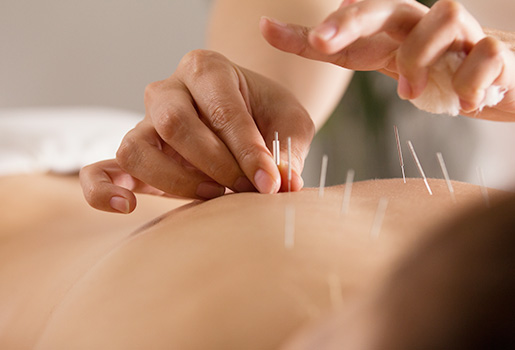
Dry needling and acupuncture are often associated with one another. Though both involve the insertion of thin needles into the skin, their underlying principles, goals and applications differ significantly.
What is Dry Needling?
Dry needling is a modern, evidence-based technique used to manage muscle pain and dysfunction. It targets the muscle tissue, fascia and tendons to help relieve tightness, improve mobility and address musculoskeletal issues. Many chiropractors, physical therapists and other healthcare professionals incorporate dry needling into care plans to complement manual therapies and enhance patient outcomes.
What is Acupuncture?
Acupuncture is a traditional Chinese medicine practice that has been used for thousands of years. It focuses on restoring the body’s energy flow—known as Qi—by stimulating specific meridian points (commonly referred to as “acupuncture points”). Today, acupuncture is recognized as a safe and effective therapy for a wide range of conditions, including musculoskeletal pain, digestive issues, and mental health concerns.
What is the Difference Between Dry Needling and Acupuncture?
“Dry needling is commonly used for treating trigger points—tight knots within muscles that can cause pain and radiating discomfort,” says Melissa Engelson, DC, DHPE, MS, CSCS, DACBSP®, TSAC-F, and assistant professor at Logan University. “Other than the philosophy, one of the main differences between these two practices is the depth of needle penetration.”
Acupuncture needles typically remain within the superficial layers of the skin and are placed at specific points along meridians. Dry needling reaches deeper into soft tissue to target dysfunction at the muscular level.
Despite their differences, both techniques can support pain management and promote healing when performed by a trained professional.
Who can Perform Dry Needling and Acupuncture?
Training requirements vary by state. Many states require formal training in dry needling—sometimes up to 50 hours—before practitioners can incorporate it into care. Logan chiropractic students may be introduced to dry needling as part of their education, but may need to complete additional training hours depending on their state’s guidelines.
“At Logan, we now offer a dry needling elective, where students engage in hands-on training, learning to locate trigger points and effectively apply the technique,” says Dr. Engelson. “This elective consists of 55 hands-on hours and five hours online. Students are expected to practice and apply the techniques learned to ensure they develop the skills necessary for safe and effective treatment.”
Acupuncture requires specialized education and national or state-level certification. Licensed acupuncturists complete extensive training to understand the theory, point location, needling technique, and safety protocols.
What are the Benefits?
Dry needling complements manual therapy techniques, helping release muscle tightness and trigger points, improving range of motion and mobility, and reducing musculoskeletal pain. Practitioners often find that incorporating dry needling accelerates results—what may take 10 minutes of manual pressure can often be achieved in 10 seconds with a needle.
Acupuncture promotes balance in the body’s energy systems, supports relaxation and stress reduction, and helps manage chronic pain, headaches and systemic conditions such as digestive or hormonal issues.
Both methods can be an effective part of a care plan, depending on a patient’s condition, comfort level, and goals.
Learn how the Logan University Health Centers can help integrate acupuncture or dry needling treatment into your health plan here, and call to make an appointment: Montgomery Health Center (636-230-1990), Stephen A. Orthwein Center at Paraquad (314-274-3367).